


Opposites are one of the earliest ways children begin to organize their world. From big and small to loud and quiet, these pairs help little ones understand change, difference, and relationship. In A Little World of Opposites, we explore how simple contrasts can spark curiosity, build language, and support early thinking skills.
Opposites help children notice the “state changes” in their own lives. A fast moment becomes slow. A noisy moment becomes quiet. A dark room becomes light again. These tiny transitions are the foundation of flexible thinking.
In early childhood, these concepts aren’t abstract. They’re lived. Children feel them in their bodies, see them in their routines, and express them through play. Our goal is to turn those everyday experiences into meaningful language and gentle learning.
Useful Fallbacks
Opposites also give children a reliable framework when the world feels unpredictable. When a toddler says “too loud” or “want quiet,” they’re not just naming a contrast — they’re communicating a need. These early words become emotional tools.
In the book, each pair is grounded in a familiar moment:
- wet hair after bath time
- dry pajamas before bed
- a narrow bridge at the playground
- a wide meadow for running
- a messy carpet after play
- a tidy shelf when everything returns home
These scenes are safe, recognizable anchors that help children understand what’s happening around them. They also help adults slow down and notice the small shifts that shape a child’s day.
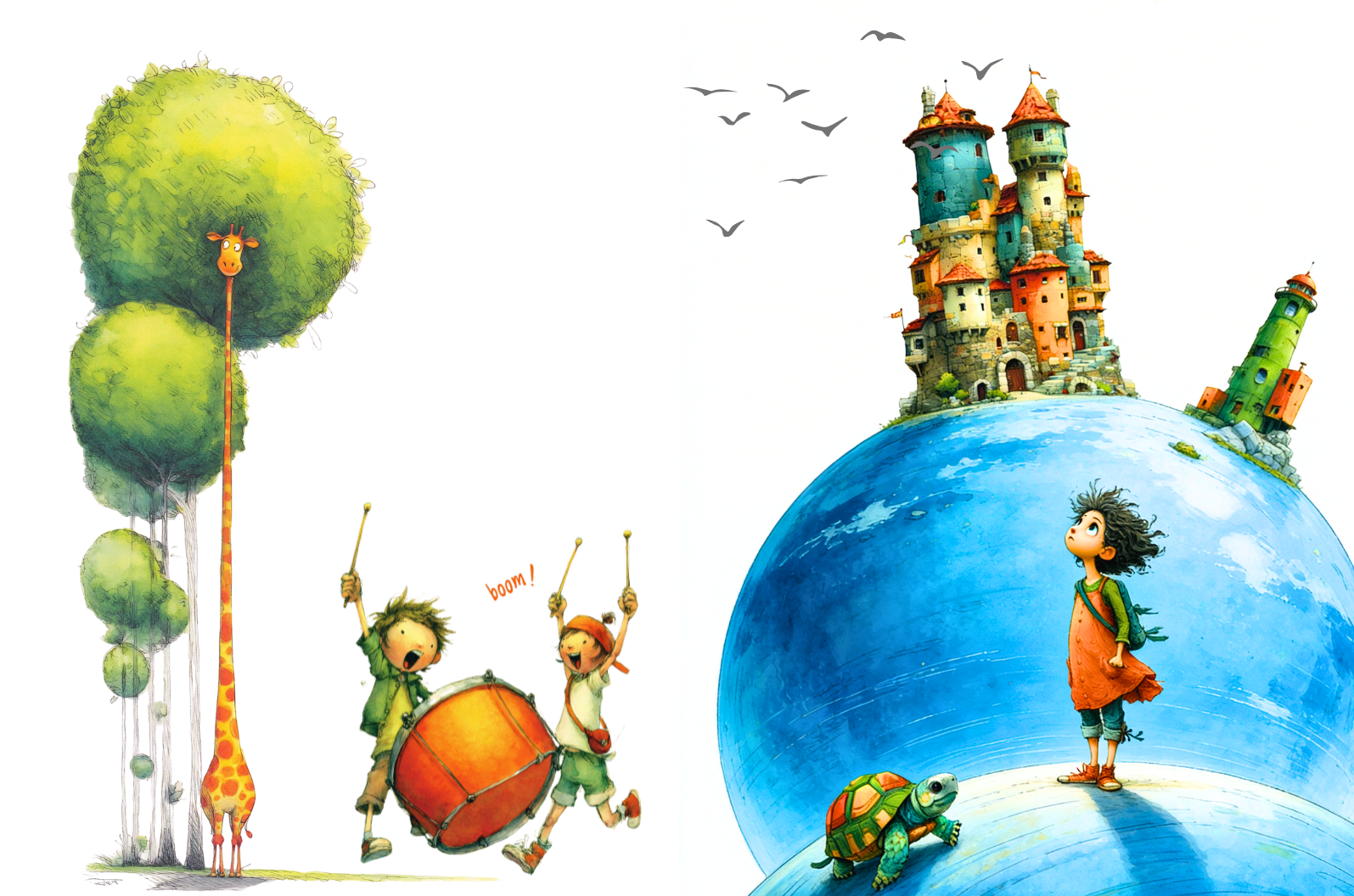
By pairing warm illustrations with rhythmic language, the book encourages children to compare, predict, and imagine: What if it changed? What comes next? These early reasoning skills support later literacy, problem‑solving, and emotional regulation.
If you’d like to explore how opposites can support early language and flexible thinking, discover A Little World of Opposites in our collection.